

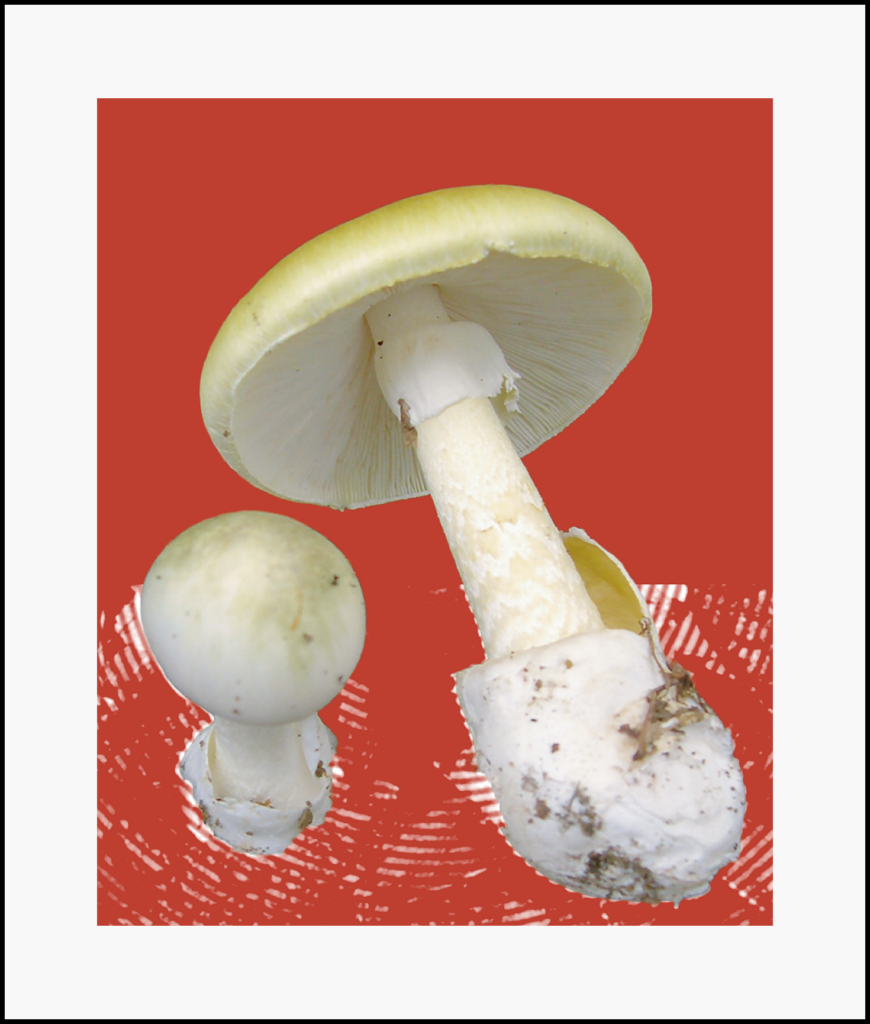
Amanita Phalloides
Amanita phalloides, commonly known as the Death Cap, is one of the most infamous mushrooms in the world. Despite its harmless, almost elegant appearance, it contains potent toxins responsible for the majority of fatal mushroom poisonings worldwide. Its ordinary look and similarity to edible species make it particularly dangerous, yet its biology and evolutionary strategy remain subjects of deep scientific interest.
Basic Information:
- Common name: Death Cap
- Scientific name: Amanita phalloides
- Also known as: Death Angel, Green Death Cap
- Distinguishing features: Greenish to yellow-olive cap, white gills, bulbous base with volva; cap 5–15 cm
Ecology & Distribution:
- Habitat: Often found near oaks, pines, and other hardwoods; forms mycorrhizal relationships
- Ecological role: Mycorrhizal — exchanges nutrients with host tree roots
- Distribution: Native to Europe but now widespread in North America, Australia, and South Africa
- Season: Late summer to early winter
Toxicity:
- Highly toxic and deadly — contains amatoxins that cause liver and kidney failure
- Responsible for most mushroom-related deaths worldwide
- Absolutely not edible; even small amounts can be fatal
- Cooking, freezing, or drying does NOT destroy toxins