

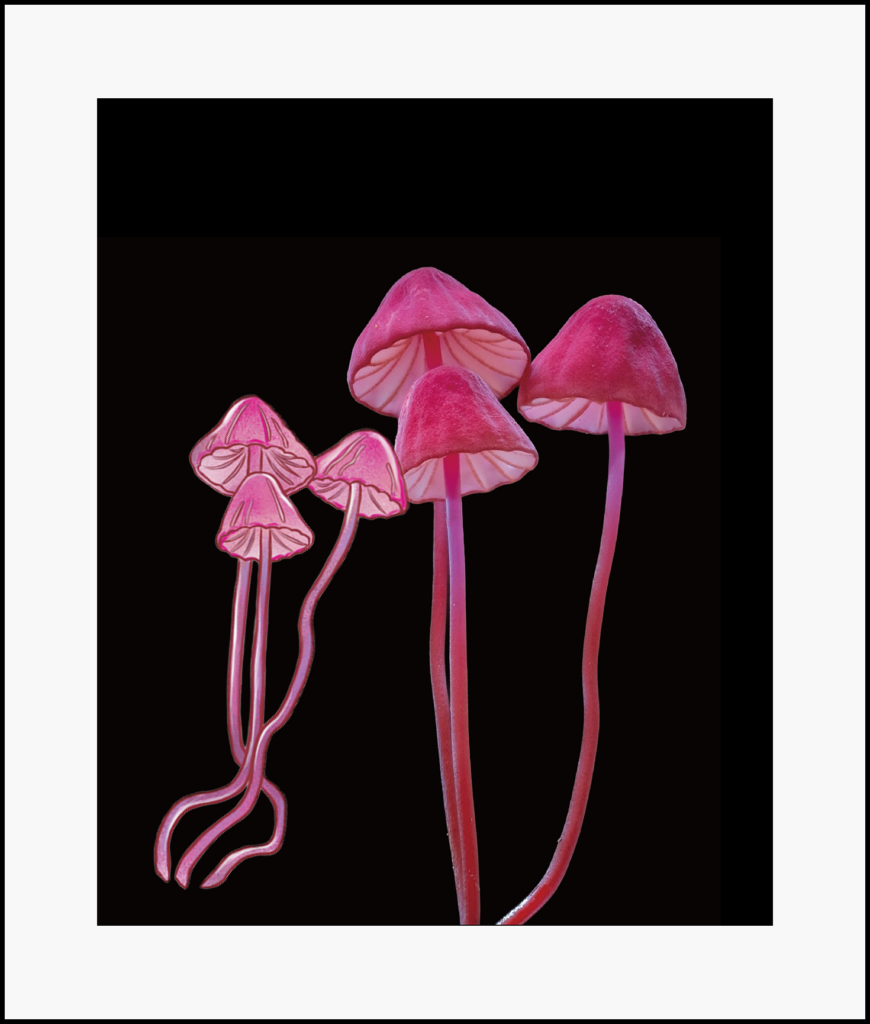
Marasmius Haematocephalus
Marasmius haematocephalus, often called the Bleeding Marasmius, is a small yet captivating mushroom known for its deep red cap and striking contrast with its thin white stem. It typically grows in delicate clusters on leaf litter and twigs, giving tropical forest floors a subtle but dramatic pop of color.
Basic Information:
- Common name: Bleeding Marasmius
- Scientific name: Marasmius haematocephalus
- Also known as: Blood Cap Marasmius
- Distinguishing features: Dark red to burgundy cap with radial grooves; thin, white, wiry stem; cap 0.5–1.5 cm
Ecology & Distribution:
- Habitat: Decaying leaves, twigs, and forest debris in humid environments
- Ecological role: Saprobic — decomposes leaf litter
- Distribution: Tropical and subtropical regions, including Southeast Asia, Central America, South America, and Oceania
- Season: Year-round in tropical climates; rainy season in subtropical areas
Toxicity:
- Inedible due to extremely small size and lack of culinary value
- No known toxicity, but not used as food
- Primarily appreciated for its aesthetic charm in macro photography